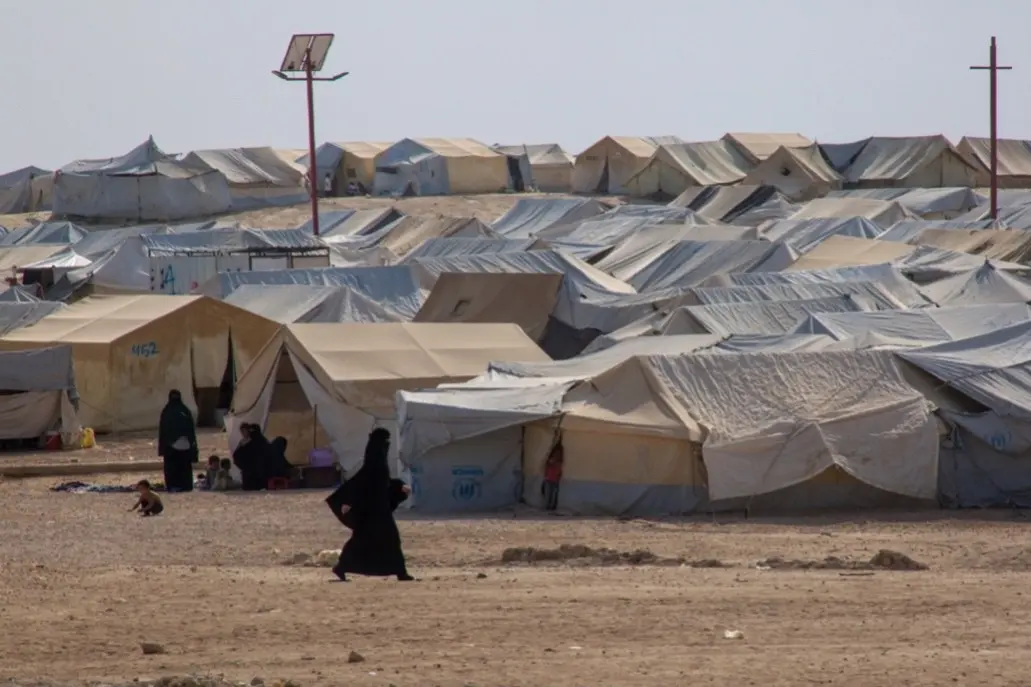
While the Al-Hol camp held more than 60,000 people in 2021 compared to 10,000 at the beginning of 2019, the Kurds of the Syrian Democratic Forces (SDF), who had been guarding the camp for several years, announced their withdrawal in the face of the advance of the Syrian Arab Army's government forces. This situation leaves the camp in a state of major security and humanitarian uncertainty.
The Al-Hol camp in its historical context
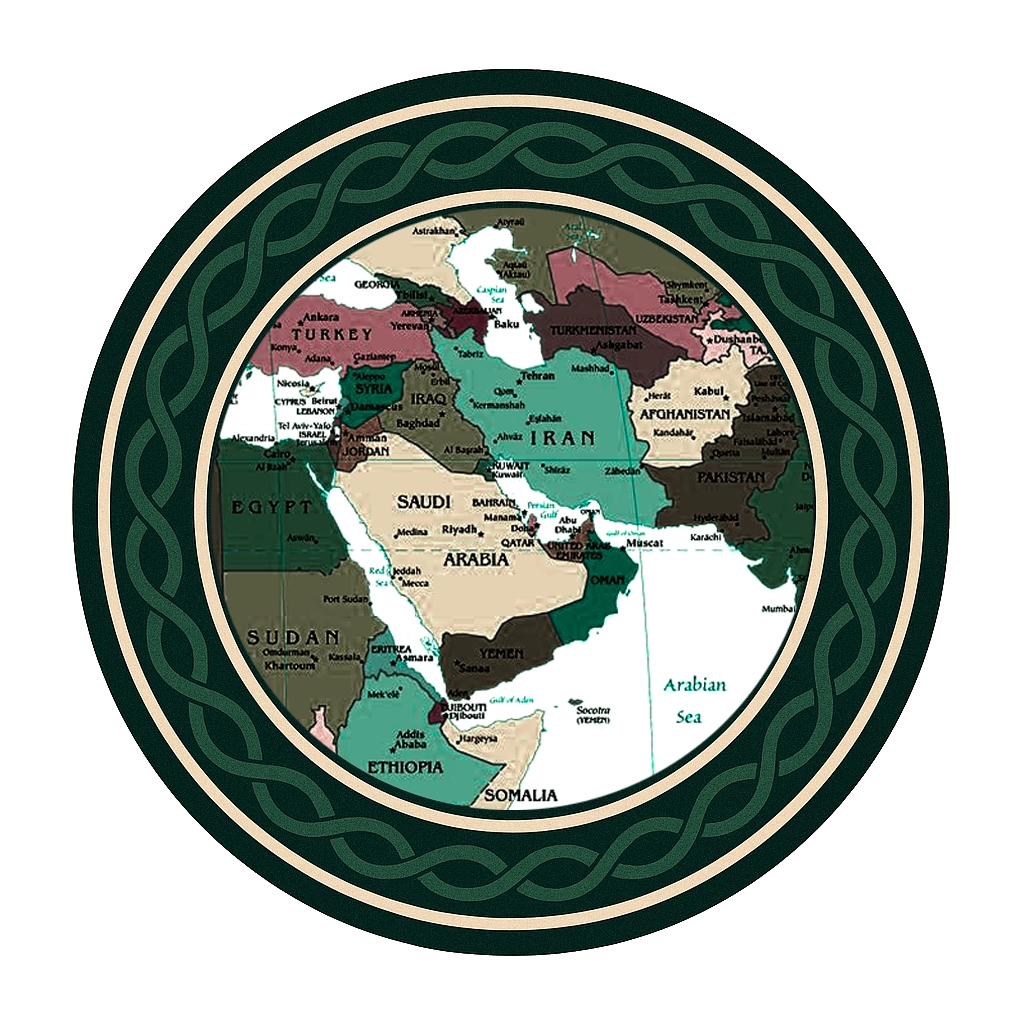
The Al-Hol camp is a refugee reception site that has transformed over time into an internment camp. It is located south of the town of Al-Hol, in north-eastern Syria, near the border between Syria and Iraq.
The camp was first established at the beginning of 1991 to accommodate refugees from Iraq, in the context of the Gulf War. As a reminder, this armed conflict, which took place between 1990 and 1991, was triggered by Saddam Hussein's Iraq invading Kuwait. An international coalition led by the United States subsequently intervened militarily to liberate Kuwait. The war concluded in February 1991 with the Iraqi defeat and the withdrawal of its troops.
The Al-Hol camp, initially set up for humanitarian purposes and intended to temporarily house civilians displaced by the conflict, was then reopened after the US invasion of Iraq in 2003, officially becoming one of three camps located along the Syrian-Iraqi border. Until 2014, it primarily retained its role of hosting refugees. The formation of the international coalition in Iraq and Syria, also known as the "Global Coalition against Daesh", in August 2014, marked a real turning point in its initial function.
The Islamic State is a political-military group created in 2006 following the dissolution of al-Qaeda in Iraq. Designated as a "terrorist group" by many states, it is driven by a jihadist ideology and quickly exploited regional conflicts to expand its influence. The group began to expand into Syria as early as 2012, before announcing, on 29 June 2014, the "re-establishment of the caliphate" over the territories it controlled, a consequence of the capture of numerous Syrian cities, including Raqqa, and later Al-Hol.
Upon Daesh's arrival in the Al-Hol region, its control over the territory gradually transformed the camp's atmosphere. Indeed, even though the majority of the population remained civilian, certain families of Islamic State fighters or sympathisers began to transit through Al-Hol, whilst Daesh's influence over security and local management began to assert itself. This context marked the beginning of an evolution that led the camp, from 2019 onwards, to host predominantly families linked to the Islamic State, profoundly altering its original purpose. Security and living conditions then sharply deteriorated, posing major humanitarian challenges for the organisations on site.
At the end of 2015, the SDF, as part of their offensive against the Islamic State in north-eastern Syria, regained control of the camp and its outskirts following battles against Daesh positions. This takeover by the SDF allowed for the restoration of a degree of security control and paved the way for the camp's reopening as a reception site for internally displaced persons, while laying the groundwork for a more organised management in the face of humanitarian challenges and the persistent influence of the families of Islamic State fighters. Along with the Roj camp, it was one of twenty-four detention centres administered by the Washington-backed SDF in northern Syria. However, despite being surrounded by barbed wire and watchtowers, the site in practice evaded total SDF control due to overcrowding which prevented comprehensive surveillance. A portion of the camp is reportedly under the influence of the Islamic State, which allegedly uses it for indoctrination and recruitment.
A mass detention space at the heart of a humanitarian and security crisis
Indeed, the lack of livelihoods for adults creates intense daily pressure on the families in the Al-Hol camp. Deprived of employment and economic resources, adults cannot provide for their children's basic needs, which increases total reliance on humanitarian aid. Moreover, the lack of access to education pushes more and more children into work. In this context, prolonged detention and deprivation of liberty exacerbate the vulnerability of children, in violation of the principles of the United Nations Convention on the Rights of the Child, which stipulates that detention must be a last resort and for the shortest appropriate period of time.
Because the camp is under strict surveillance, no one can leave without authorisation, even for essential needs. These authorisations, issued by the Asayish (the police of the Kurdish autonomous administration), are rarely granted. To access healthcare, women must pass through a checkpoint, have their photograph taken, and provide their personal information at every crossing, which discourages them from seeking help and leads to serious medical issues, including infections, vision problems, and dental issues.
Described as a "prison" or "detention camp" by some media due to extremely harsh living conditions, the Al-Hol camp resembles a genuinely heterogeneous and composite abandoned camp, bringing together Iraqi refugees and nationals from more than 60 countries (Tunisians, French, Comorians, etc.), who are "neither survivors, nor innocents, nor guilty, in that many are not tried locally, and the authorities of their countries refuse to repatriate them," reported Hazem al-Amine, for Daraj, in 2022.
The main difficulty lies in the fact that the camp is predominantly occupied by minors. Indeed, nearly 80% of the occupants are under the age of 12, and 30% are aged five or under. These children detained in the Al-Hol camp live in extremely precarious conditions, lacking sufficient access to food, drinking water, healthcare, and education. According to a recent report by Save the Children, only 40% of children aged 3 to 17 receive a school education. Destitution and insecurity are consequently omnipresent; in 2026, 79 people were killed in the camp, including three children by gunfire, and fourteen other children died in various accidents, notably fires. These conditions further exacerbate the mental fragility of the children, already heavily affected by detention. In addition, these children, also known as the "little hands of jihad", face significant recruitment into the troops of the Islamic State. So to speak, 21,000 minors (notably Iraqis), brought to the Al-Hol camp in 2019, were reportedly recorded in 2021, and are allegedly being "indoctrinated and prepared to become future fighters for the Islamic State group," the UN observed in 2025.
Obstacles to the repatriation of Al-Hol camp detainees
This report is in line with the decision reached in May 2024, following which Iraq and the United Nations agreed to repatriate all Iraqi nationals present in the Al-Hol camp by 2027. Recently, the Iraqi National Security Advisor called on all countries concerned to bring back their citizens in order to allow for the swift closure of the camp.
Indeed, while the Al-Hol camp houses many individuals with no affiliation whatsoever to the Islamic State, some detainees perceive Al-Hol as the "last remnant of the caliphate", a true "breeding ground for radicalisation". The UN report of 6 February (S/2025/71/Rev.1) analysing the remaining activities of the Islamic State group highlighted that instances of radicalisation, training, and incitement to external operations had been reported.
Consequently, owing to these major risks, the majority of the states concerned remain reluctant at the prospect of repatriating their nationals who joined the Islamic State, along with their family members. It was in this regard that Hanny Megally and Paulo Sérgio Pinheiro, two officials from the UN Commission of Inquiry on Syria, had highlighted "the risk to national security that would be entailed by the return of these mothers, as well as their children, potentially carrying a violent and extremist ideology." By way of example, in June 2025, a French delegation (including Amélie Morineau, president of the liberties and human rights commission of the National Bar Council, and MEP Mounir Satouri) recorded tens of thousands of individuals suspected of having ties to the jihadist organisation, including 120 children and some fifty women of French nationality. Indeed, having been struck by terrorist attacks perpetrated by the Islamic State, notably in 2015, France had halted its repatriation operations in the summer of 2023. This decision comes despite several international condemnations, including that of the European Court of Human Rights (ECHR) on 14 September 2022. In fact, the Court had condemned France for failing to examine the repatriation requests on their merits, thus underlining "that it is incumbent upon the French government to resume the examination of the applicants' requests as soon as possible, surrounding it with appropriate safeguards against arbitrariness." The Court considered that although it does not establish an automatic right to repatriation, it may be required to do so in the event of "exceptional circumstances," such as here, when a child finds themselves "in a situation of extreme vulnerability."
Furthermore, it emphasised the issue of refusals to repatriate children, who are detained in terrible conditions despite not being accused of any crime. The children in the Al-Hol camp are very often born to mothers who voluntarily travelled to Syria as part of their radicalisation process, which constitutes an obstacle to their repatriation, insofar as they could not be repatriated without their mothers. Nevertheless, the aforementioned UN Commission of Inquiry on Syria stated that "whilst most of the mothers went to Syria of their own free will, the same is not true of their children. Punishing children for the acts committed by their parents is unjustifiable." This prioritisation of child protection encourages states to repatriate them, while insisting on the fact that these children are not protected by being kept indefinitely in detention.
Nonetheless, a phenomenon of stigmatisation is gradually becoming apparent, reflected in this negative perception which has reinforced their exclusion, drastically limiting their prospects for reintegration or repatriation.
The evacuation of the Al-Hol camp: humanitarian progress or heightened security risk?
Although imperfect, this control by the SDF was effective until the announcement, on 20 January 2026, of the withdrawal of Kurdish forces from the camp. This withdrawal is part of the obligation incumbent upon them to "reposition themselves on the outskirts of towns in northern Syria under the threat of the army," reported La Croix in January. With the Damascus authorities having regained control of the camp, they implemented a voluntary closure plan, compelling the 24,000 remaining prisoners to be transferred or repatriated.
While the "Annex" (the high-security section of the camp) once held many foreign nationals from 42 nationalities whom their states refused to repatriate, today it is virtually empty, and according to humanitarian workers on the ground, only a few thousand people remain in the entire camp. Among the 24,000 remaining prisoners, more than 5,700 jihadists (including 3,500 Syrians and foreigners – Iraqis, Arabs, or those from other continents) were transferred to Iraq by the United States from prisons surrounding the camp. However, many of the transferred individuals run the risk of being sent to states where they could face ill-treatment. Indeed, Human Rights Watch stated that the approximately 5,700 transferred detainees "are at risk of enforced disappearance, unfair trials, torture, ill-treatment, and violations of their right to life."
Furthermore, the withdrawal of the Kurds caused, according to Arthur Quesnay, a specialist on Syria, the escape of 80% of the occupants of Al-Hol. Indeed, the camp had been facing a phenomenon of illegal escapes during the Kurdish occupation, which escalated between the SDF withdrawal and the Damascus takeover. In this regard, he pointed out that "the most dangerous individuals were among those who managed to flee, particularly during the first hours of the security vacuum, between the departure of the Kurdish forces and the arrival of the government army." Thus, most Syrian nationals left Al-Hol to return to their home towns, while many foreigners headed west, towards the governorates of Idlib or Aleppo.
Consequently, the SDF withdrawal from the Al-Hol camp and the resumption of control by the Syrian army illustrate the persistent fragility of security in this region. While the gradual closure of the camp allows for the relocation or repatriation of some prisoners, it also highlights the humanitarian and security challenge posed by the presence of foreign jihadists and the management of mass evacuations.
The progressive evacuation of the Al-Hol camp appears promising given the critical humanitarian conditions that prevailed there. This withdrawal, followed by the resumption of control by Damascus, will have allowed a drastic reduction in the concentration of vulnerable people and facilitated the repatriation or transfer of detainees. However, the situation highlights significant risks of security failure; the mass escape of the majority of the occupants underscores that the withdrawal of the Kurdish forces created a vacuum that could be exploited by the most dangerous individuals, whilst the transfer of numerous detainees to other countries exposes them to risks of ill-treatment or violations of their fundamental rights.
Finally, the closure of Al-Hol does not mean the end of the problem of similar camps in Syria. Indeed, other sites, such as the Roj camp, remain operational and continue to house vulnerable populations, requiring similar humanitarian and security attention. However, the closure of the Al-Hol camp offers a glimpse of an uncertain yet potentially favourable future for the prisoners in these camps, notably the Roj camp, who are convincing themselves of an imminent release.
- « Syria refugee camp 'womb' for new generation of IS extremists as killings surge », Sky News, 18 février 2021
- « At a sprawling tent camp in Syria, ISIS women impose a brutal rule », Washington Post, 3 septembre 2019
- « Syrie : les forces kurdes se retirent d'un grand camp de familles de prisonniers djihadistes », La Croix, 20 janvier 2026
- « What Do You Know About Al-Hol Camp », Waradana, 10 octobre 2024
- « Syrie : urgence humanitaire et espoir fragile au camp d'Al‑Hol », UN News (Nations Unies), 27 janvier 2026
- « En Syrie, 27 000 enfants prisonniers abandonnés dans l'enfer du camp d'Al‑Hol », Amnesty International France, 29 novembre 2021
- « Al‑Hol Camp: Syrians Face Uncertain Future Amidst Security Risks », Voice of America, 28 février 2024
- « Dans le camp d'Al‑Hol, l'incubation du monstre qu'incarne la génération post‑Daech », Hazem al‑Amine (Daraj), Courrier International, 7 juillet 2022
- « Mon fils est juste un enfant comme les autres », Human Rights Watch, Expériences d'enfants rapatriés des camps pour suspects de l'EI et leurs familles dans le nord‑est de la Syrie, 21 novembre 2022
- « Enfants de Daech, les damnés de la guerre », France Télévisions, documentaire réalisé par Anne Poiret, 2021
- Thirty‑fifth report of the Analytical Support and Sanctions Monitoring Team (S/2025/71/Rev.1), 6 février 2025
- « Return and Repatriation of Foreign Fighters and Their Families », OHCHR (Office of the United Nations High Commissioner for Human Rights), 2024
- « العراق لدول عوائل داعش: اسحبوا رعاياكم حتى يغلق مخيم الهول », Al-Arabiya, 10 mai 2024
- « Les forces démocratiques syriennes ratissent le camp de déplacés d'Al‑Hol après 40 meurtres », Euronews, 29 mars 2021
- « En Syrie, les nouvelles autorités face à l'épineuse question de l'évacuation du camp d'Al‑Hol : cet endroit est un nid à radicalisation », Le Monde, 25 juin 2025
- « Al-Hol Camp: Release, Return and Reintegration of Syrian Residents », Ahmad, J. & Darwich, S., IMPACT Research, 2021
- « Opinion editorial by the Commissioners of the Independent International Commission of Inquiry on the Syrian Arab Republic published in Le Monde », OHCHR — United Nations Office of the High Commissioner for Human Rights, 2021
- « Des enfants français devenus majeurs dans les camps syriens demandent leur rapatriement », Le Monde, 16 juin 2025
- « Syrie : trois femmes et dix enfants détenus dans des camps de prisonniers djihadistes rapatriés en France, une première depuis 2023 », Le Monde, 16 septembre 2025
- « La France condamnée par la CEDH pour son refus de rapatrier deux femmes djihadistes détenues en Syrie avec leurs enfants », Le Monde, 14 septembre 2022
- « Syrie : les Kurdes se retirent du camp de réfugiés d'Al‑Hol », La Croix, 20 janvier 2026
- « En Syrie, le plus grand camp de proches de djihadistes se vide de ses détenus », Courrier International, 19 février 2026
- « Syria closes IS‑linked Al‑Hol camp after emptying it », Agence France‑Presse (AFP), 22 février 2026
- Sallon, Hélène, « En Syrie, le camp d'Al-Hol vidé par l'évasion massive de familles de djihadistes syriens et étrangers », Le Monde, 14 février 2026
- « Maintenant toute la Syrie est à nous : la vie en transit des familles libérées du camp d'al-Hol », Le Figaro, 22 février 2026
- « نسبة تمويل الخطة الإقليمية الإنسانية في سوريا عام », عنب بلدي (Enab Baladi), 11 décembre 2023
- « Syrie : le camp d'al-Hol, symbole de l'après-État islamique démantelé par les autorités », Radio France Internationale, 20 février 2026
- « En Syrie, dans le camp de Roj, les prisonnières djihadistes persuadées d'être bientôt 'libérées' », Le Monde, 6 février 2026